
In times when sophisticated packing machinery is common, unit dose packing finds many applications in the food industry, pharmaceutical industry, and chemicals industry due to its convenience, precision in dosage, and freshness retention. In whichever way, be it tomato ketchup packed in a fast food joint, instant granules of medicines in a pharmacy store, or a shampoo pack in a hotel, the success of such packages depends on the effective use of Sachet Filling and Sealing Machines.
Nevertheless, with a variety of raw materials available, how to select suitable equipment for your needs becomes a practical issue. This article provides you with information about material properties, technical parameters, and factors to consider when purchasing the Sachet Filling and Sealing Machine.
1. Sachet Filling and Sealing Machine Selection: Four Core Material Types
Product physical condition is the first crucial consideration when choosing a Sachet Filling and Sealing Machine, as different levels of fluidity, viscosity, surface
e tension, and particle sizes require entirely different metering systems to ensure accurate dosage.
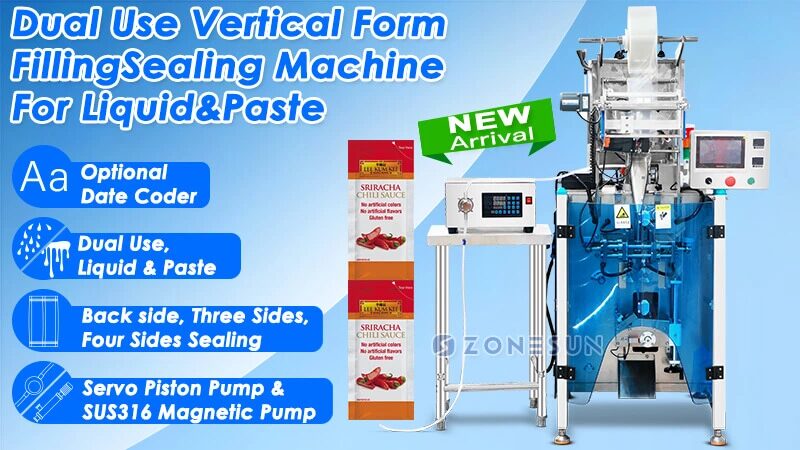
Liquid Products & Low-Viscosity Dosing Systems
Free-flowing liquids such as tap water, juices, liquid detergents, mouthwashes, and alcohol-based liquids have low resistance to flow but cause difficulties when it comes to splashing, liquid sloshing, and dripping at high speeds in vertical indexing machines. The valves or positive displacement piston pumps of the traditional gravity-fed types are applied in this situation.
Technical details:
- Anti-Drip Devices: With low-viscosity liquids, special vertical form fillers and sealers employ servo-driven peristaltic and piston pumps together with anti-drip nozzles.
- Seal Area Protection: With the anti-drip nozzles for the low-viscosity liquids, these retract to ensure that dripping does not occur into the seal area.
- High Seal Pass Rate: The protection of film seals from any contamination ensures the protection of them from bursting due to the transit pressure and ensures high seal pass rates of more than 99.5%.
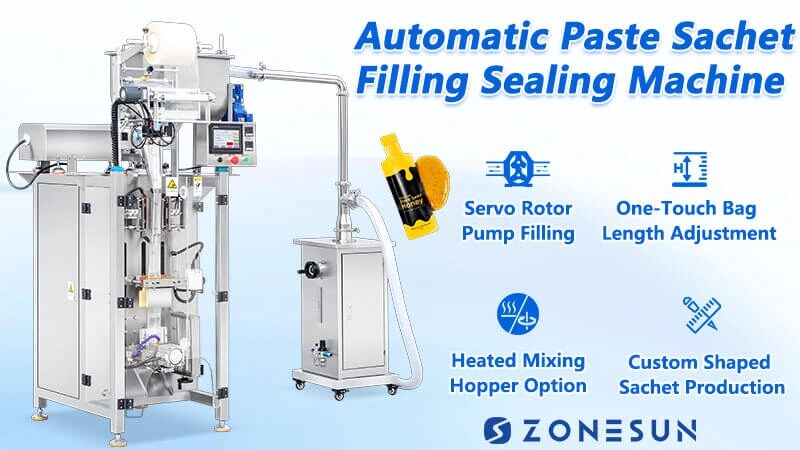
Paste Products and High Viscosity Handling
Various viscous and non-Newtonian liquids like tomato paste, peanut butter, honey, cosmetic creams, ointments, and greases do not flow naturally due to gravity force. Using normal hoppers in dispensing these pastes results in air pocket formation and huge differences in weight.
Core issues of design include:
- Forced-Displacement Feeding: These materials need active dispensers fitted with heated hoppers, agitator mechanisms, or pneumatic pressurized aid.
- Heavy-Duty Pumping: Dense pastes in the food and chemical industries depend largely on heavy-duty pumping equipment.
- Precision Dosing: With precision auger extrusion or rotary lobe pump, the equipment keeps filling tolerances at ±1%, actively forcing thick paste into the forming tube without necking or trapping of products on seal margins.
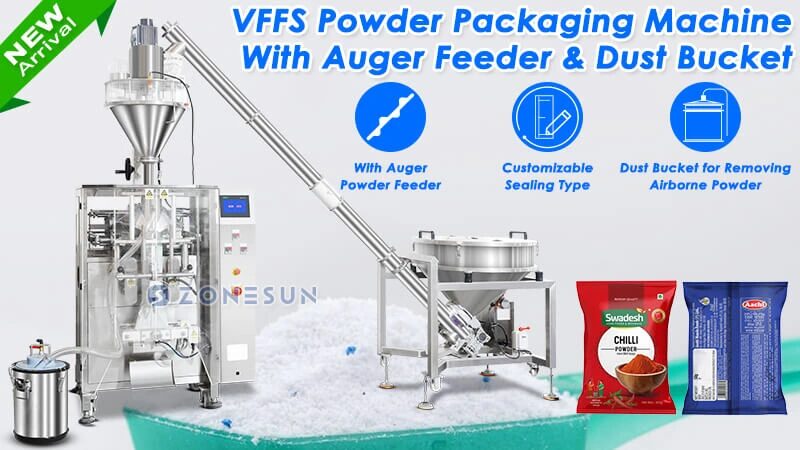
Powder Materials & Dust-Proof Engineering
Powder products offer a completely different physical problem. Fine powders, such as instant coffee, matcha powder, pharmaceutical powders, milk powder, and chemical reagents, exhibit different bulk densities, produce airborne dust, and easily absorb moisture from the atmosphere, leading to clumping within the feed chute.
Important characteristics of the process include:
l Servo-Driven Auger Fillers: In the case of a powder sachet filling machine, the sachet filler machine makes use of a vertical dosing auger installed in a sealed hopper, and the rotation number determines the amount of displacement.
- Agitation De-Aeration: Agitation keeps the powder de-aerated and compacted at a constant bulk density.
- Dust Containment System: In case of powder packaging in a large-scale or dusty environment, special powder packaging equipment uses a fully enclosed charging hopper, vacuum filling equipment, and a dust extraction shroud system that keeps the dust levels within the factory below 5 mg/m³.
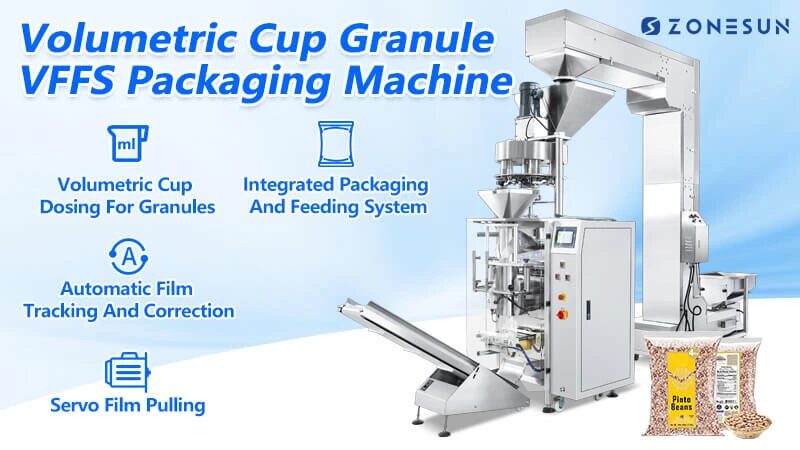
Granular Materials & Fast Volumetric Dispensing of Materials
Granular materials like granulated sugar, granulated salt, dried herbs, silica gel, seeds, and small hardware components are characterized by consistent geometric shape, the same density, and high flow speed under gravitational force. Since granules don’t stick to each other, like cohesively bound powders, granules can be dispensed at faster line speeds.
Important features include:
- Volumetric Cup & Weighing: A machine dedicated to granules is normally either a volumetric cup machine or an electronic combination weigher.
- Gentle Handling of Materials: Machines for granular materials are generally equipped with an adjustable volumetric cup disk in conjunction with electromagnetic vibratory feeding tables for gentle handling of fragile products.
- Fast Output Speed: Such a system enables the continuous handling of the materials without breaking the fragile particles with steady output speeds of 40-70 units per minute per lane.
2. Sachet Filling and Sealing Machine Comparison Matrix: Evaluating Core Performance
In order to find out why these four groups of materials, as well as machine designs that work with them, are considered industry standards, one needs to consider the impact that the physical condition of a substance has on the operational principle of packaging machinery. All four ZONESUN Sachet Filling and Sealing Machines presented below have been selected deliberately since they represent each of the four types of substances that are commonly used in flexible packaging: liquids, pastes, powders, and granules. Each machine has its own special way of filling.
Comparing these machines will give you an idea of what kind of pouch filling and sealing machine suits your particular materials best.
| Material Type | Model Example | Primary Metering System | Dosing Accuracy | Target Speed (Pouches/Min) | Suitability Rating |
| Liquid | ZONESUN Liquid/Paste VFFS | Servo Piston Pump & Magnetic Pump | ±0.5% | 45-150 bags/minute | ★★★★★ |
| Paste | ZONESUN ZS-FS510U | Servo Rotor Lobe Pump | ±1.0% | 25-40 bags/min | ★★★★★ |
| Powder | ZONESUN Larger Volume Auger | Electronic Scale/Screw/Measuring Cup/Four-Head Volumetric Cup | ±1.0% | 5-80 bags/minute | ★★★★★ |
| Granules | ZONESUN ZS-MCQ520 | Vertical Auger Screw | ±0.5% | 30-60 packs/min | ★★★★★ |
3. Key Purchasing Factors Beyond Physical Material Traits
The choice of the right valves or auger screws is just one part of the process. The other part involves evaluating certain technical factors before selecting the final plant machinery layout for increased uptime and OEE.
Film Type for Sachets and Thermal Seal Management
Sachets are made from various types of film layers such as PE, OPP, PET, barrier foils, and biodegradable paper films.
- Temperature Precision: A good Sachet Filling and Sealing Machineshould have two zones of PID Digital temperature control using solid-state relays to minimize thermal drift to ±1°C.
- Seal Quality: Uniform temperature control ensures no pinhole leaks of foils as well as no scorching of films when the machine stops briefly.
Throughput and Integration With Upstream/Downstream Automation
Facilities’ throughput requirements will determine if a smaller, single-lane intermittent machine or a larger multi-lane continuous motion packaging machine is needed.
- Scale Capabilities: Though pilot facilities and small batch contract packagers can utilize multi-purpose single-track machinery, scale-up to commercial manufacturing mandates the use of a durable Sachet Filling & Sealing Machine designed for continuous line integration.
- Optional Peripheral Modules: Features for integration include interface capabilities with hot-stamp date coders, TTO, lasers, tear-notch punches, in-line check weighers, and automatic cartoners.
Machine Fabrication and Sanitization Standards
For applications within the food industry, beverages, and pharmaceuticals, sanitability is of utmost importance.
- Material Specification: The frames and all parts with which products make contact need to be fabricated from SUS304 or SUS316 stainless steel to endure aggressive washdown agents.
- Maintenance Friendly: The ability for quick disassembly using a tool-less modular system is essential to enable plant staff to disassemble pumps, hoppers, and filling heads in less than 10 minutes to reduce downtime during batch changes and cleaning of the machine, such as CIP.
Conclusion
In order to choose the suitable Sachet Filling and Sealing Machine, an extensive assessment needs to be performed in terms of fluid viscosity, material bulk density, particle size, production rate, and film barrier properties. Proper matching of product parameters with a suitable dosing system will guarantee sustained performance of the machine, minimal product giveaway, and high-quality packages.
If you have any queries related to the selection of Sachet Filling and Sealing Machines or need an automation solution for your products, please feel free to contact us!