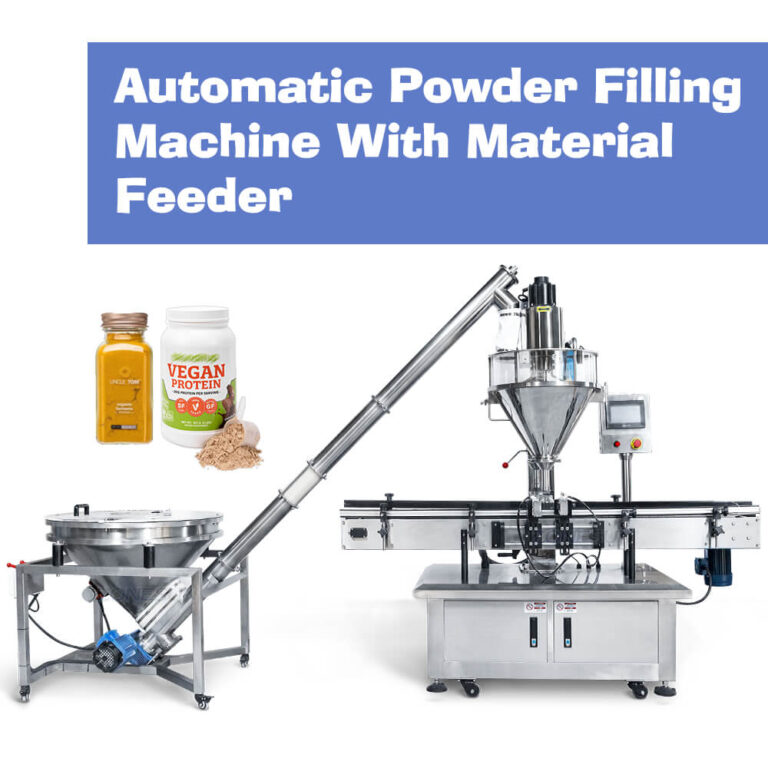
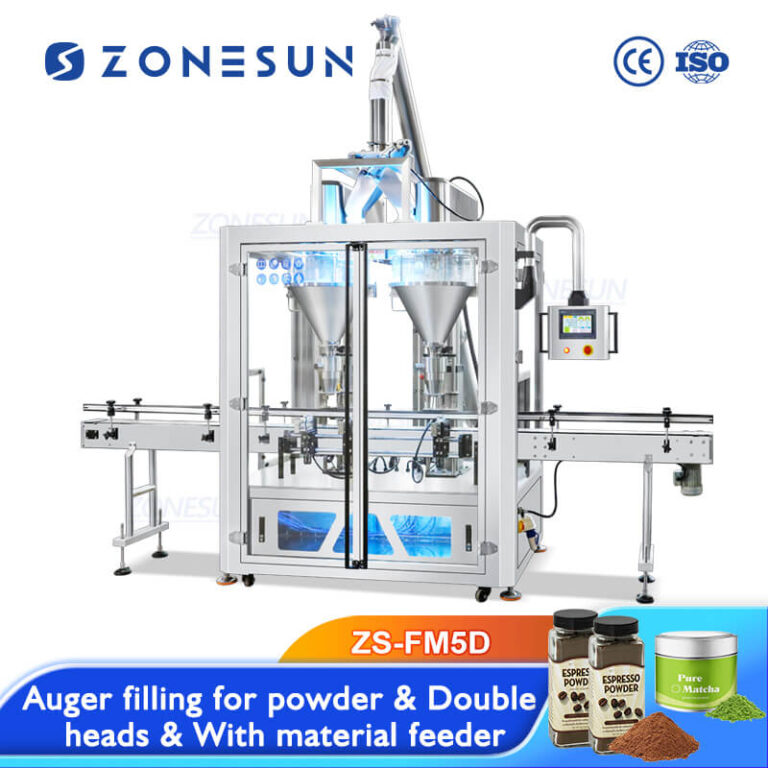
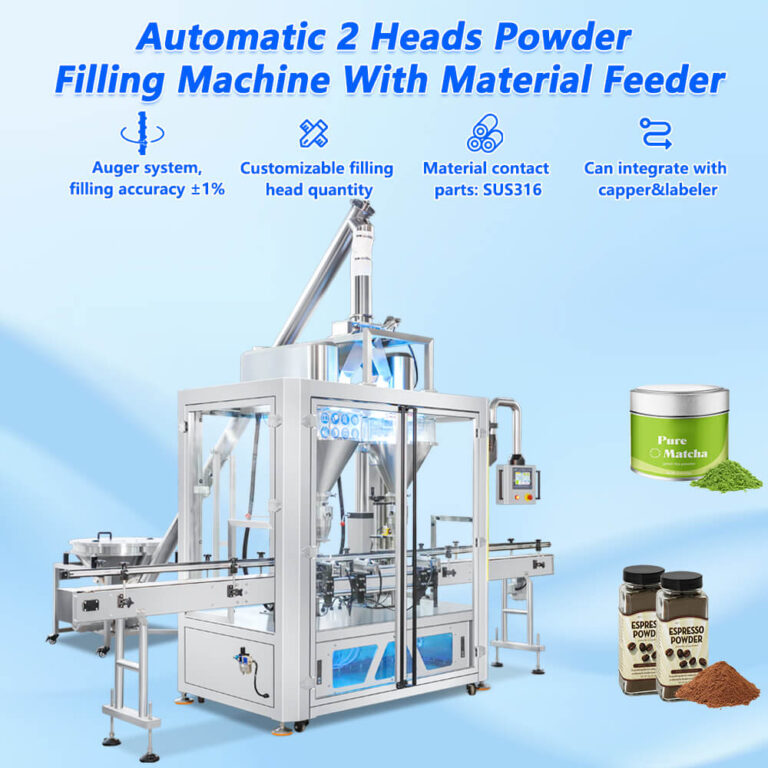
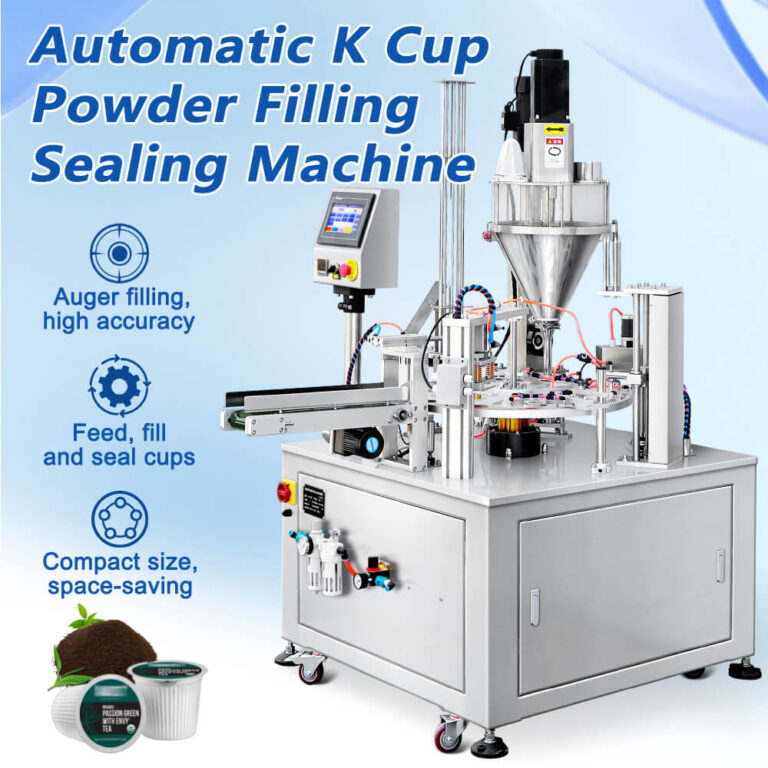
Powder Filling Machine
What is the working principle of a powder filling machine?
Put powder in a hopper. The machine takes a measured dose out and drops it into a container. Then it does that again.
That’s the whole machine, really. The frame, the touchscreen, the guarding — support crew for those two actions.
Three facts decide which metering system you buy: how well your powder flows, how stable its bulk density is, how tight your weight tolerance has to be. Get those right and the choice almost makes itself. Get them wrong and no amount of stainless steel rescues the project.
One more thing before the detail: if your powder is fine, dry and organic, read the dust section further down first. It changes what you’re allowed to buy.
Metering and containment: the two halves that decide your day
A powder filler is a metering system bolted to a containment system. Buyers who regret their purchase almost always got one half right and ignored the other.
Metering is the dose. A screw turning in a tube, a fixed cup, a load cell under the container, a vibrating tray — each one has a different accuracy profile, and a different tolerance for powders that refuse to behave. Accuracy is decided here, and it’s the part of the quotation you should interrogate hardest.
Containment is everything else: hopper geometry, seals, extraction, level sensing, how fast you can strip the machine between products. Powders go everywhere. Fine ones go everywhere twice.
Five ways to meter powder — and how to pick the right powder filling machine
- Auger fillers
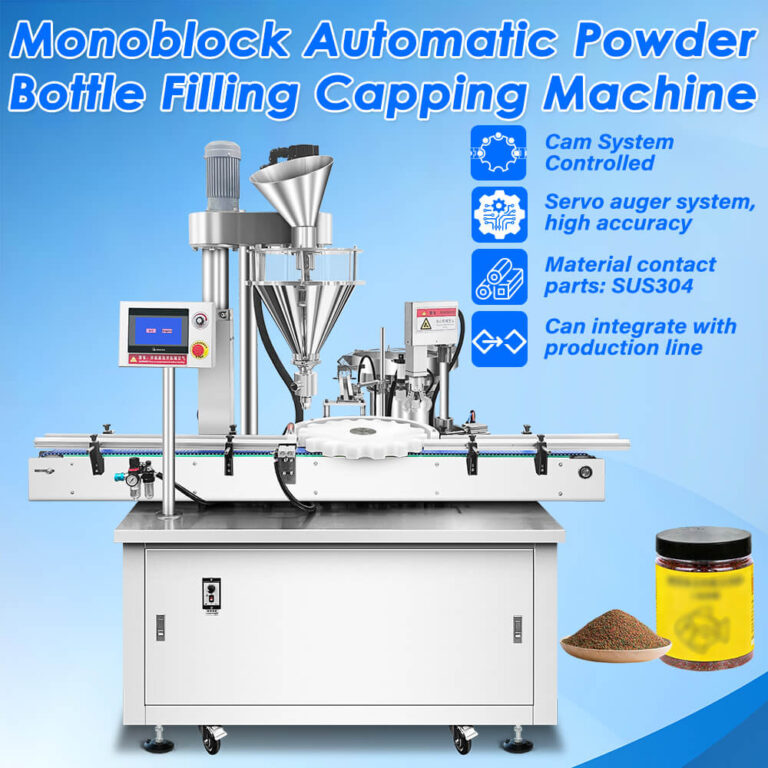
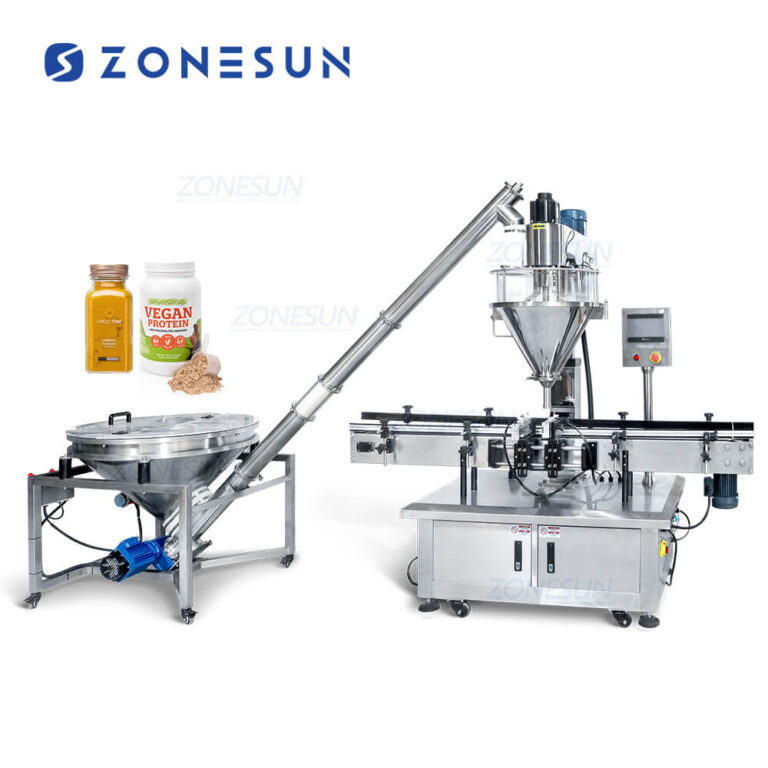
A screw turns inside a tube and pushes powder out the bottom. Volume per revolution is the dose, and since the screw repeats that revolution identically, fills stay consistent for hours. For a large share of powders this is the default answer.
Does it hold accuracy? On stable product with servo control, yes — better than 99% of target fill weight is normal in production, and ±0.25% is achievable when everything is set up properly.
Where augers bite back is changeover and cleaning. A new fill weight usually means a new screw. A new product means opening the tooling and getting powder out of threads you didn’t know existed. Quick-release designs turn that into a ten-minute job. Bolted assemblies turn it into an afternoon you’ll remember.
- Volumetric cup fillers
A fixed cup scoops powder from the hopper and tips it into the container. Very little to go wrong, and very little to maintain.
Density is where it bites. The cup measures volume, so if the bulk density wanders — different grind, different supplier, a cold night in the store room — the weight on the scale wanders with it, and the machine won’t say a word. For sugar, salt, detergent and dry mixes that’s perfectly acceptable: free-flowing, steady, forgiving tolerances. It’s also how multi-lane systems reach the speeds you see on snack and dairy lines.
- Net weight fillers
Load cells sit under the container, and the fill stops when the scale says so. Nothing inferred. Nothing assumed.
You can defend this method in an audit, because you’re measuring what you actually ship, container by container — which is why pharmaceutical blends, nutraceutical actives and premium coffee live here. The trade is cycle time: every fill waits for a scale, so throughput runs lower than an auger or cup system.
- Vibratory and gravity fillers
Powder trickles from a vibrating tray or chute. The fill is judged by weight or level, never by counting screw turns. Nothing pushes hard against the product. That makes it the answer for anything that crumbles — instant coffee granules, agglomerated milk powder. Slower than an auger, and fine dust needs extraction. For fragile products, though, there’s often nothing better.
- Vacuum and pneumatic systems
Powder travels through a closed path in a stream of air. You pay more, and what you get is cleanliness — no dust in the room at all. When the material is toxic or sensitising, that isn’t a luxury.
Quick comparison
Here is how the main powder filling machine types stack up on the numbers that matter.
| Method | Typical accuracy | Best powder type | Speed | Changeover effort | Watch out for |
|---|---|---|---|---|---|
| Auger filler | >99% of target weight (tighter with servo) | Free-flowing to mildly cohesive | Medium–high | Screw change per fill weight | Product buildup on the screw |
| Volumetric cup | Volume-based; drifts with density | Free-flowing, stable density | High | Cup change per volume | Density variation across batches |
| Net weight | Weight-exact, verifiable per container | High-value, unstable density | Low–medium | Recipe change on HMI | Slower cycle; scale maintenance |
| Vibratory / gravity | Moderate, weight or level controlled | Fragile, agglomerated granules | Medium | Format parts | Dust escape without extraction |
| Vacuum / pneumatic | Moderate, closed path | Toxic or sensitising powders | Medium | System flush between products | Capital cost, air handling |
How to choose a powder filling machine: five checks worth doing first
A funnel and a sample. That’s the first test, and it beats any datasheet. Two powders can share a bulk density and behave nothing alike. Bridge on the bench, bridge in a hopper at 2 a.m. Nobody there to clear it.
Density: weigh it twice. On arrival, then a week later in your own store. Powder settles. It drinks moisture. Five percent drift, five percent off every volumetric fill, and the machine never mentions it.
Budget comes down to one question. What tolerance can you actually sell? 500 g of coffee at ±1% is ±5 g — an auger shrugs at that. A 2 g pharma dose at ±1% is ±0.02 g. Now you’re talking servo control, climate, and a different price bracket entirely.
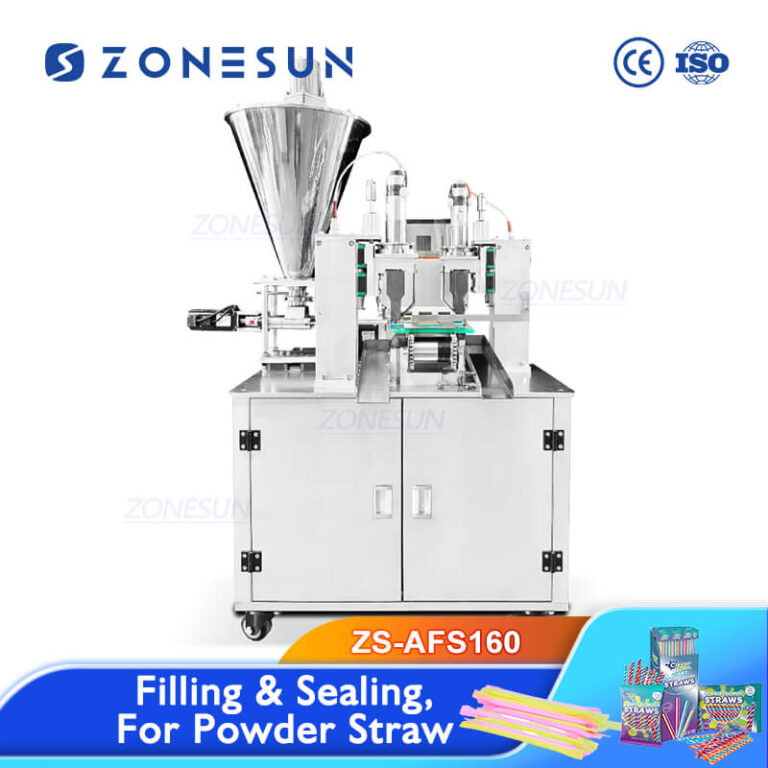
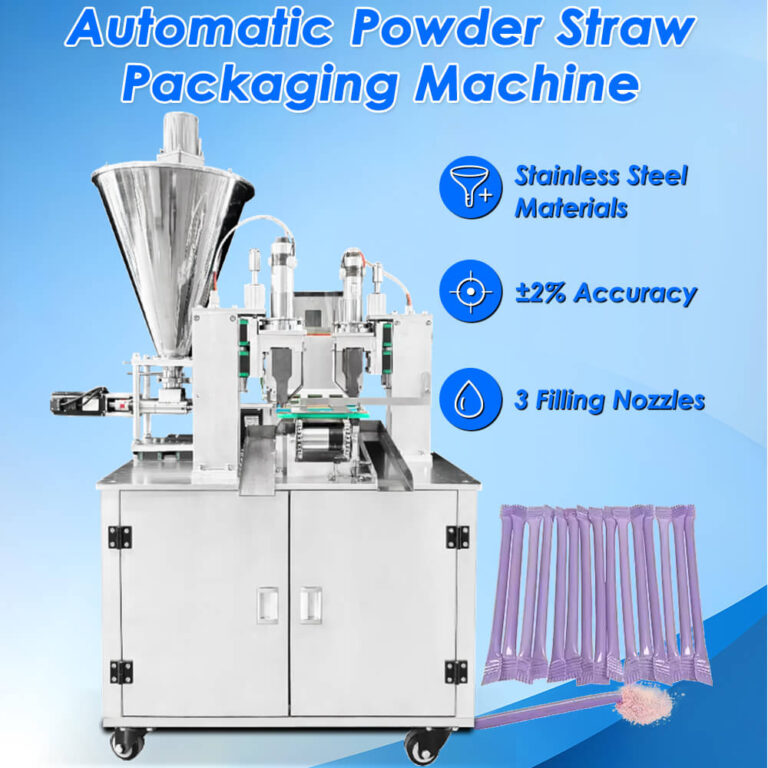
Containers surprise people. Narrow-neck bottle. Tall jar. Stick pack. Sachet. Pouch. Capsule. Vial. Each one changes nozzle access, fill height, how it’s held. Build around the container.
Dust is the item nobody budgets and everybody regrets. Flour, sugar, starch, milk powder, cocoa, plenty of APIs. Combustible, all of it. Extraction and explosion protection go in the specification — not in a retrofit.
Powder isn't one material — and six examples prove it
Start with the easy guest: coffee. Behaves well, throws fines, and whole-bean or capsule formats lean on volumetric and auger dosing. Dairy is the opposite — hygroscopic, cohesive, bridging in the hopper and building up on the screw, so extraction gets budgeted from day one. Flour, starch and baking mixes flow beautifully and are simply aggressive in the air. Combustion risk, not accuracy, writes that specification. Spices bring their own oils: sticky, small fill weights, changeovers arriving constantly.
The high-value end is a different country entirely. Lactose, microcrystalline cellulose, milled actives — tight tolerances, containment, paperwork an auditor accepts, net weight or servo auger, designed for GMP from the first drawing. Chemical and detergent powders sit somewhere else again, where aggressive materials decide the wetted parts and the seals for you.
What ZONESUN builds in this category?
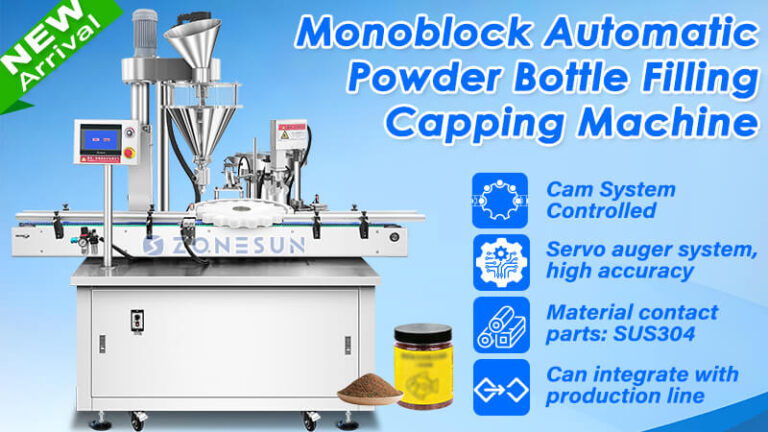
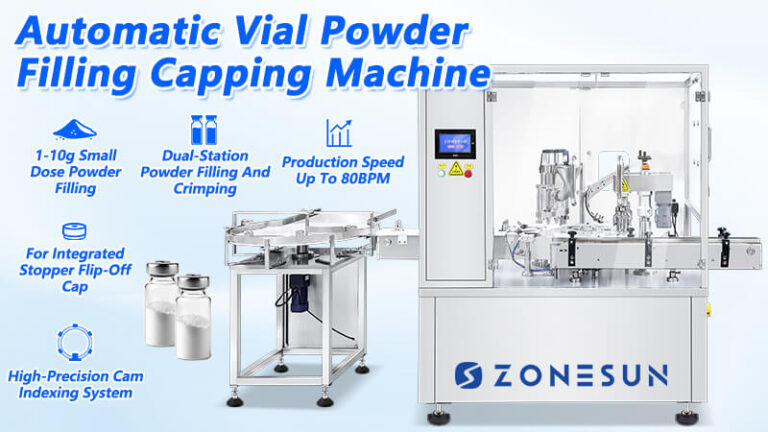
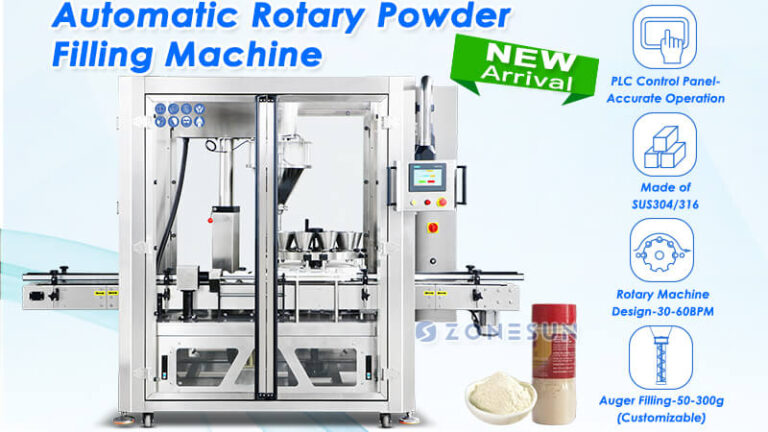
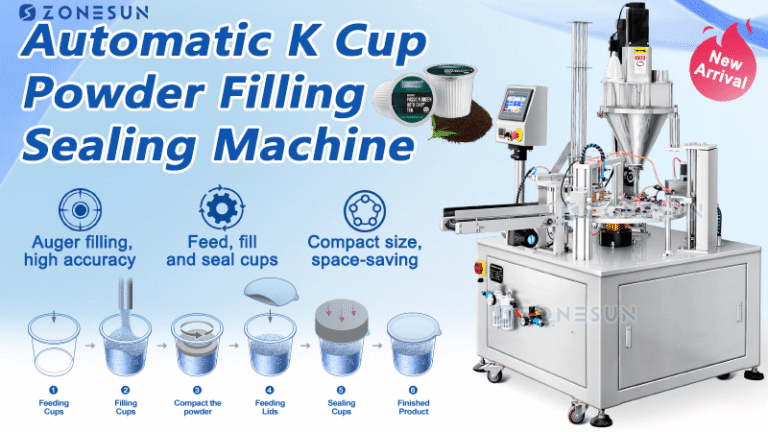
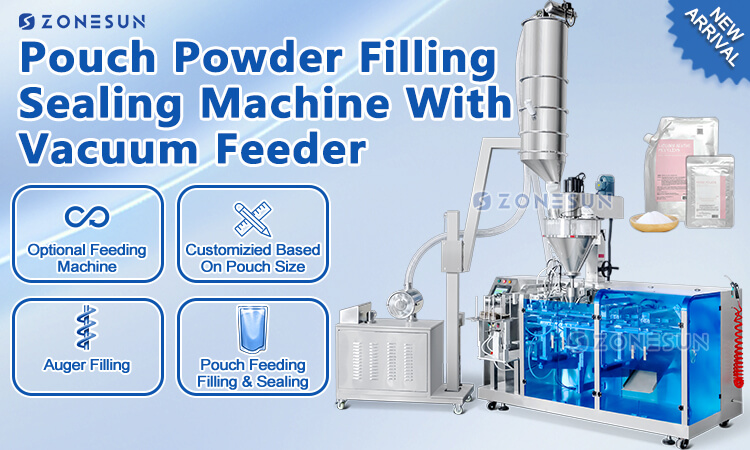
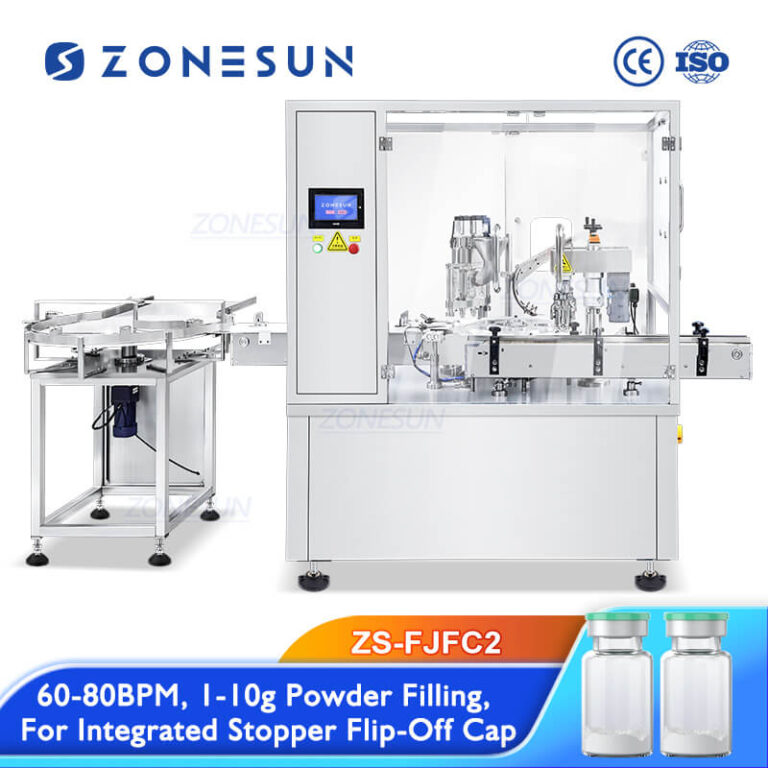
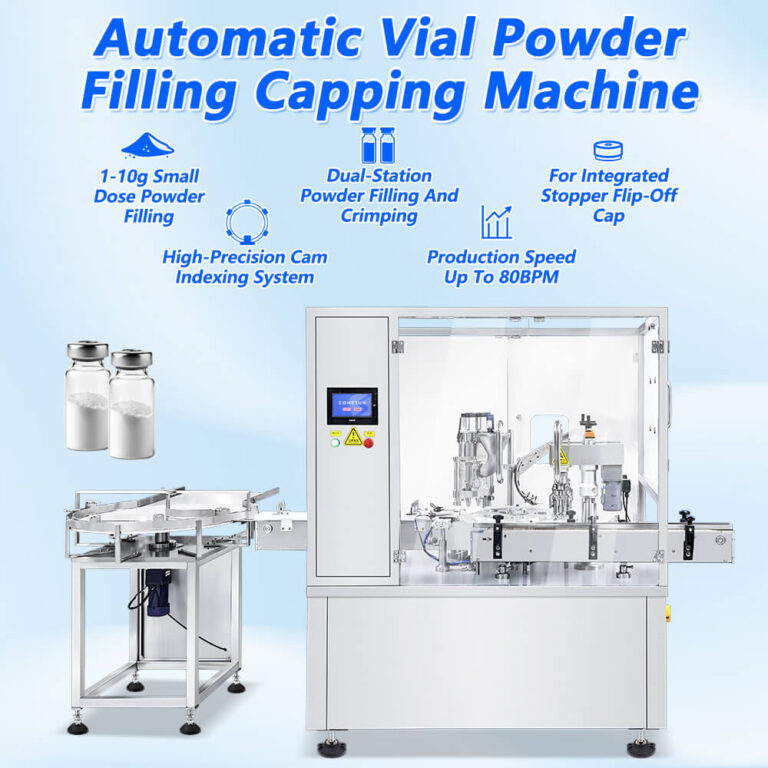
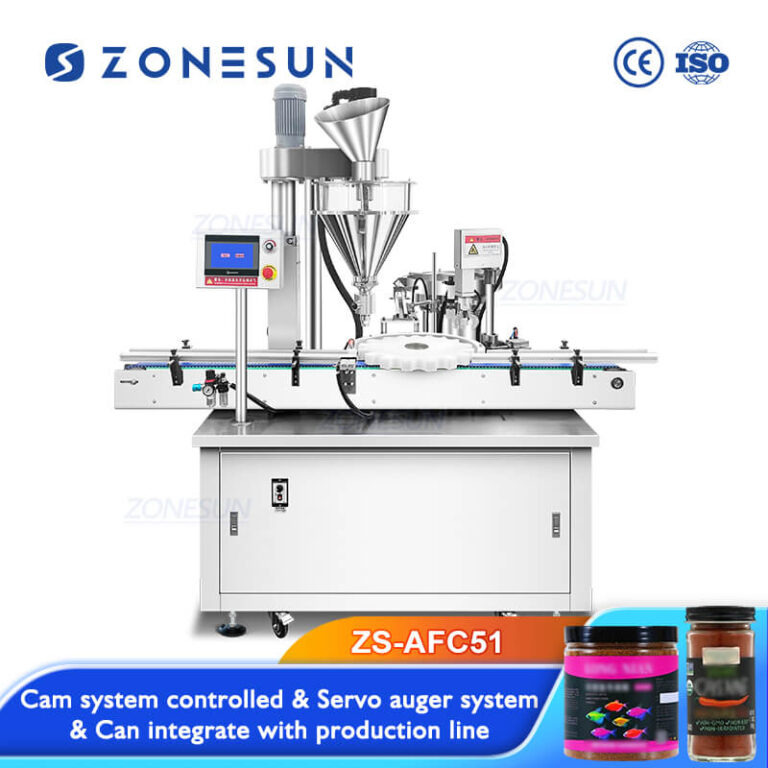
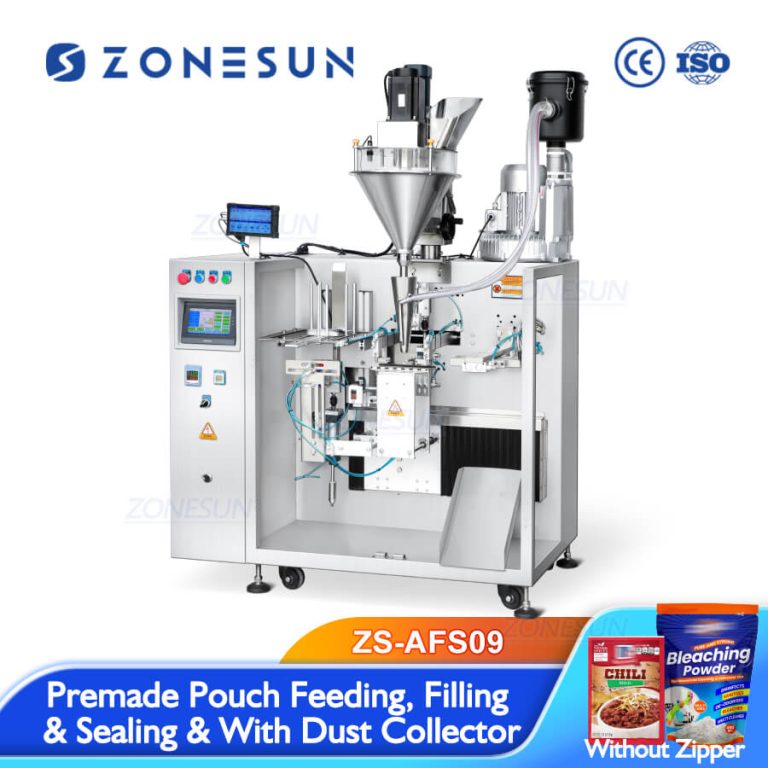
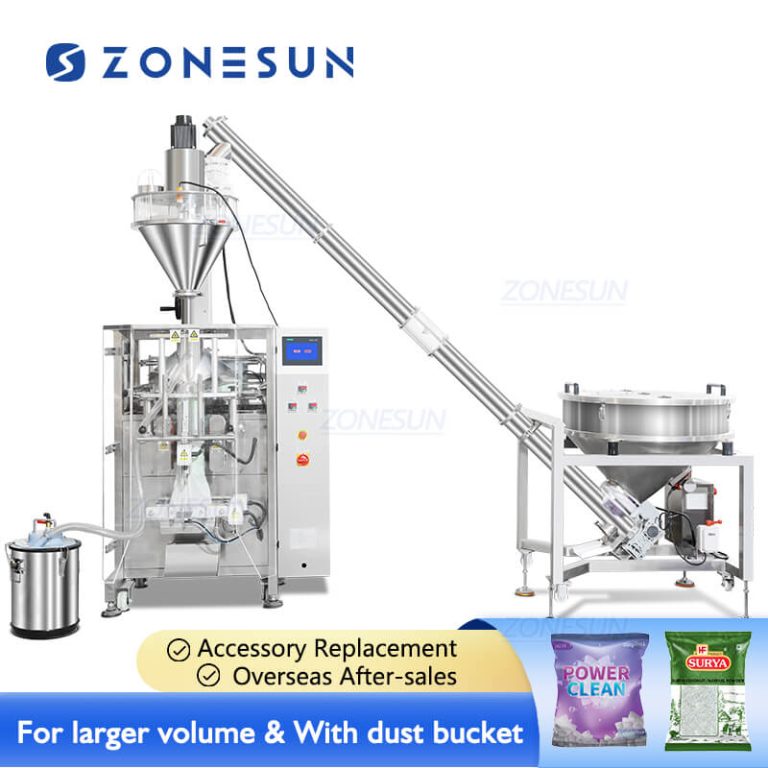
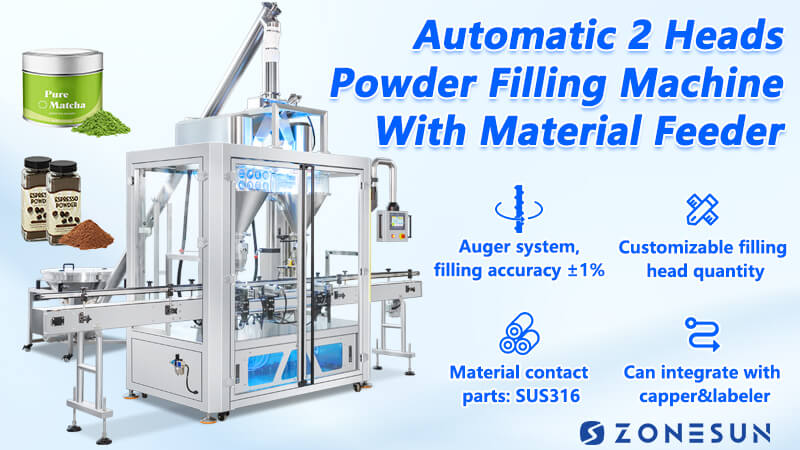
ZONESUN has been manufacturing packaging machinery for over a decade, and the powder bench runs from a desktop vial filler up to servo auger lines for bottles and pouches. Current models include:
Certificates
ZONESUN is a certified powder filling machine manufacturer with CE certifications, conformity certifications, quality management system certifications, and patent certifications. As a manufacturer of these kinds of products, ZONESUN assures quality in products.


FAQ
Net weight, and it isn’t close. The container rides a scale and the fill stops the moment the number is right — no inference from volume, no trusting a screw. Servo augers get close on stable product, and we run ±0.25% routinely on free-flowing powders. Cup fillers are the fast, cheap option, and typically the first to embarrass you when the powder changes.
Mechanically, sometimes. Commercially, rarely. Pharma drags in hygiene, containment and documentation that a bakery line simply never needs.
Within a gram on free-flowing product. Often better. Cohesive powders spread wider until the screw and hopper match that exact material, which is why we insist on test figures rather than catalogue numbers — a figure measured on sugar says nothing about whey protein.
Depends on your dust and how you handle it. Flour, sugar, starch, milk powder, cocoa, plenty of APIs — all combustible. A dust hazard analysis settles the question, and in a growing number of countries it’s required rather than advised.
Three fixes, usually in combination. Hopper geometry that matches your powder’s flow. Vibration or agitation at the wall. Moisture control on the incoming material. If it bridges in a funnel test, it will bridge in production.
15–30 minutes with tool-free auger and funnel removal, clean-down included. Bolted tooling and a fully stripped hopper: an hour, and two people.
Usually yes. Semi-automatic auger filler, separate sealer, prove the product — then upgrade to inline or rotary once orders justify it.
Conclusion
Three decisions, in order. Metering follows your powder’s flow and how much its density moves. Containment and cleaning follow dust risk and hygiene rules. Size follows container and the speed you can honestly sustain.
Get that order right and the machine outlives the product it was specified for.