
Automatic vial filling is an essential step in the manufacturing processes of pharmaceuticals, biotech companies, cosmetology, healthcare, etc. Precise dosing and reliable handling play a crucial role in ensuring the quality and efficiency of the process. The Automatic Vial Filling Machine integrates vial feeding, positioning, filling, stoppering, capping,g and inspection processes into a single cycle. Depending on the machine design, the speed of filling can vary from dozens to hundreds of vials per minute. Learning the basics of these stages helps to better assess the filling machinery needed.
1. What Is an Automatic Vial Filling Machine?
An Automatic Vial Filling Machine is a special device used for precise dosing of liquid products into the vials at the specified speed. The machine is used by manufacturers when conventional filling is not enough in terms of consistency and efficiency.
Basic Function of the Machine
Its main purpose is to deliver the required amount of product into each vial while maintaining stable filling conditions. The machine can be configured according to factors such as filling volume, liquid viscosity, vial size, and required production capacity.
There are different filling techniques depending on the type of product. A peristaltic pump, for example, provides controlled dosing and is often used in case of the need of repeatable filling is required. The machine design can vary depending on the properties of the product and the requirements of the production process.
2. What Is the Working Process of an Automatic Vial Filling Machine?
The working process of an Automatic Vial Filling Machine consists of several connected stations. Each station performs a specific task while the control system keeps vial movement and filling operations synchronized.
Vial Feeding and Positioning
When the machine is started, empty vials are supplied to the feeding system, where they are arranged and transported towards the filling stage. Sensors control the presence and correct position of the vials. Then the vials reach the filling station, where they are aligned with the nozzle for dispensing. Precise positioning helps to avoid misalignments, liquid spillage, and other mistakes during dispensing.
Product Dosing and Filling
After positioning, the Automatic Vial Filling Machine activates its dosing system. The product is transferred from the supply tank through the nozzle and filled into the vial. The quantity of the liquid dispensed is controlled by the pump. If, for example, the required volume of liquid is 10 mL, then the filling process is adjusted to dispense this amount consistently. The accuracy of filling depends on the pump used, liquid properties, calibration, and operating conditions.
Actual filling accuracy depends on the pump, liquid properties, calibration, and operating conditions. Filling speed must also match the product. Excessive speed may cause splashing or foaming, while a controlled speed can provide more stable filling results.
Stopper Placement
After filling, the vial moves to the stoppering station. Individual stoppers are sorted and positioned over the vial opening before being pressed into place. The Automatic Vial Filling Machine coordinates stopper placement with vial movement to reduce positioning errors. This step also limits unnecessary manual contact and prepares the vial for final sealing.
Capping and Sealing
The stoppered vial then moves to the capping station. Caps are automatically fed, positioned, and secured according to the packaging design. Crimping is typically employed for sealing aluminum caps with a strong seal around the vial neck. Proper sealing force is critical for effective closing of the vials while avoiding damage to both the vials and caps.
Inspection and Discharge
Once sealing is complete, finished vials can pass through an inspection section. Basic systems may check vial presence, filling level, or cap position, while advanced equipment can use vision inspection to identify visible defects. Qualified vials are then discharged for the next production or packaging step. Defective vials can be detected and eliminated from further processing.
3. How Does an Automatic Vial Filling Machine Control the Filling Process?
The performance of an Automatic Vial Filling Machine depends on the precise cooperation of mechanical components and control systems. Sensors, pumps, and PLC controls help to maintain the stability of filling and vial handling.
Sensors and Automatic Position Detection
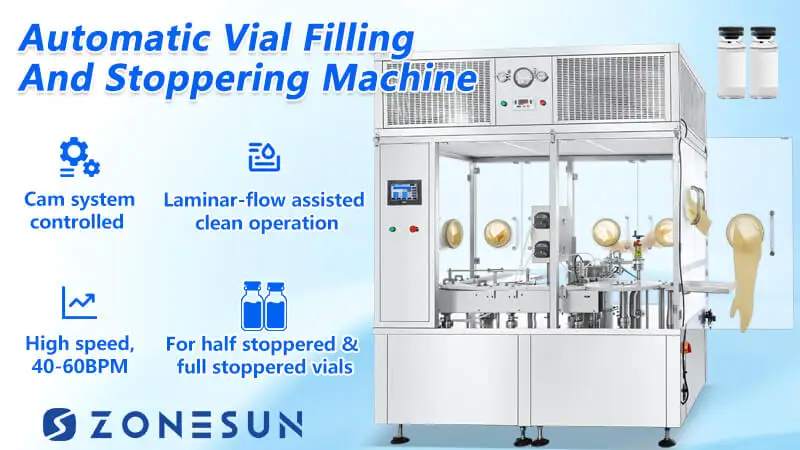
Precise positioning of vials is necessary for stable filling. Sensors check the presence of each vial and its proper positioning before the process of filling begins. This helps to minimize errors, such as missed filling, incorrect positioning of the nozzle, and waste of product. For manufacturers that need accurate vial handling and multiple integrated operations, the ZONESUN ZS-AFC9H High Speed Liquid Vial Filling Stoppering Machine High Speed Liquid Vial Filling Stoppering Machine
is a practical option. Its main features include:
- Precise Vial Positioning: Uses a star wheel mechanism to transport and position vials accurately throughout the process.
- Integrated Operations: Combines bottle unscrambling, peristaltic pump filling, stopper sorting and inserting, and stopper pressing in one monoblock unit.
- Two Filling Nozzles: Equipped with two filling nozzles for efficient liquid filling.
- Stable Production Speed: Operates at approximately 40–60 bottles per minute, depending on the filling range.
- Laminar Flow Hood: Includes a laminar flow hood to help improve packaging conditions during production.
- Compact Configuration: Designed for small- to medium-volume vial packaging production.
Filling Volume and Speed Control
Filling volume and speed are set according to product and vial requirements. Operators can adjust these parameters through the control interface, while the system coordinates pump operation and filling timing.
Common considerations include:
| Parameter | Typical Range or Option |
| Filling volume | 1–100 mL or customized |
| Production speed | 30–200+ vials/min |
| Filling nozzles | Single or multiple |
| Control system | PLC-based |
| Detection | Photoelectric or other sensors |
These figures are general references. Actual performance depends on liquid viscosity, vial size, filling method, and machine configuration.
PLC and Automated Operation
PLC acts as the control center of an Automatic Vial Filling Machine. It gets signals from sensors and synchronizes the operation of pumps, conveyors, filling heads, stopper systems, and capping devices. Operators can use a touch screen to set parameters and monitor the operation status of the machine and to respond to possible alerts. In case of detection of any abnormal condition, the system may stop or interrupt a particular operation,n which will help to decrease losses and risks for equipment.
4. What Are the Benefits of Using an Automatic Vial Filling Machine?
The use of an Automatic Vial Filling Machine can increase the efficiency of the production process by automating the handling of vials and controlling the dosing of liquid in them. The key advantages of this equipment are increased efficiency, improved consistency, less labor intensity, and better hygiene.
Higher Filling Efficiency
An Automatic Vial Filling Machine can increase output by automating vial positioning, filling, and handling. Compared with manual operation, it reduces repetitive work and allows a more continuous production cycle.
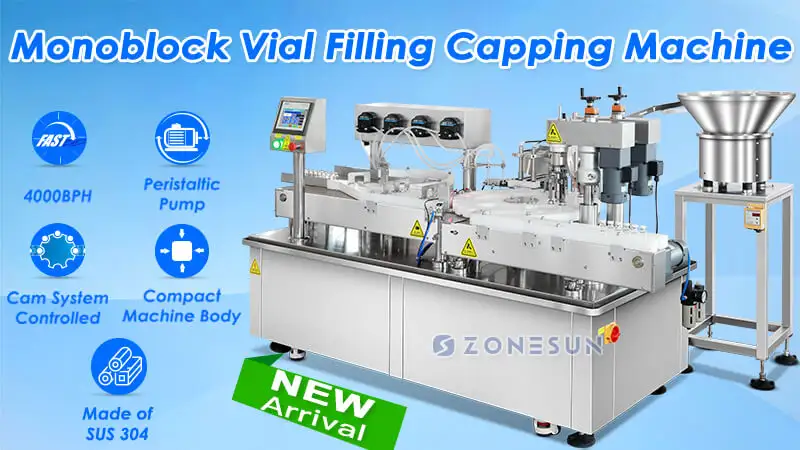
For small-scale production, increasing output can be difficult when a single filling head limits the number of vials processed per cycle. The ZONESUN ZS-AFC39 4-Head Vial Filling and Capping Machine is a suitable choice for manufacturers looking for higher filling efficiency in a compact setup. Its key features include:
- Four Filling Nozzles: Processes multiple vials in each filling cycle to improve production output.
- Peristaltic Pump: Provides controlled and repeatable liquid dosing.
- High Efficiency: Reaches approximately 4,000 units per hour, depending on filling requirements.
- Filling Accuracy: Achieves approximately ±1% filling accuracy.
- Integrated Filling and Crimping: Combines liquid filling and vial crimping in one monoblock machine.
- SUS304 Components: Filling nozzles and the vibrating bowl sorter are made of SUS304 for reliable vial handling.
Better Filling Consistency
Consistent dosing is another important advantage. Once the filling parameters are properly calibrated, the machine can repeat the same dosing cycle with limited variation. This is particularly useful when products require controlled filling volumes. Stable dosing also makes downstream inspection and quality control easier.
Reduced Manual Labor
The Automatic Vial Filling Machine minimizes manual activities like positioning vials, dispensing liquid into them, placing stoppers, and sealing caps. Rather than manually handling each vial, the operator needs only to control the machine, provide material for it, and monitor the working conditions of the production process.
Improved Production Hygiene
Automation can reduce direct human contact with vials and products during processing. A controlled material flow also helps organize the movement of containers between different production stages. However, equipment automation alone does not guarantee hygienic production. Cleaning procedures, equipment materials, environmental conditions, and product requirements should also be considered.
Conclusion
The Automatic Vial Filling Machine performs vial packaging in a synchronized process that includes feeding, positioning, dosing, filling, stoppering, capping, inspection, and discharging. The sensors assist with vial positioning, the pumps control product dosing, and the PLC system coordinates the processes. For producers, the choice of the configuration depends on such factors as the vial size, vial filling volume, liquid properties, required precision, and production capacity. In case of any questions about the requirements for vial filling or equipment, feel free to contact us at ZONESUN.