
The Lotion Filling Machine deals with products with very different viscosities and other physical properties. In the absence of proper maintenance, residues from lotions can accumulate around filling nozzles, valves, pumps, and other areas coming into contact with the products, which would affect filling accuracy and hygienic standards in production.
The organized maintenance regime will allow the operator to ensure consistent performance of the Lotion Filling Machine as well as minimize unnecessary time losses. In most cases, the operator should perform basic maintenance after each cycle of production and more complex inspections on a weekly or monthly basis.
1. Why Is Regular Maintenance Important for a Lotion Filling Machine?
Regular maintenance is not limited to keeping equipment clean. It directly affects filling accuracy, product quality, operating stability, and the service life of key components.
Reduce Product Buildup and Contamination
Lotion can remain on nozzles, pipes, seals, and other product-contact components after production. Over time, dried residue may restrict product flow or create hygiene concerns. Therefore, the cleaning process should begin shortly after production is finished instead of leaving lotions inside the machine for many hours. This is especially true for thick lotions that include oils, waxes, or emulsifying agents.
Maintain Consistent Filling Accuracy
A Lotion Filling Machine must maintain stable filling parameters to deliver consistent volumes from one container to the next. Small changes in piston movement, valve operation, or product flow can gradually create filling deviations.
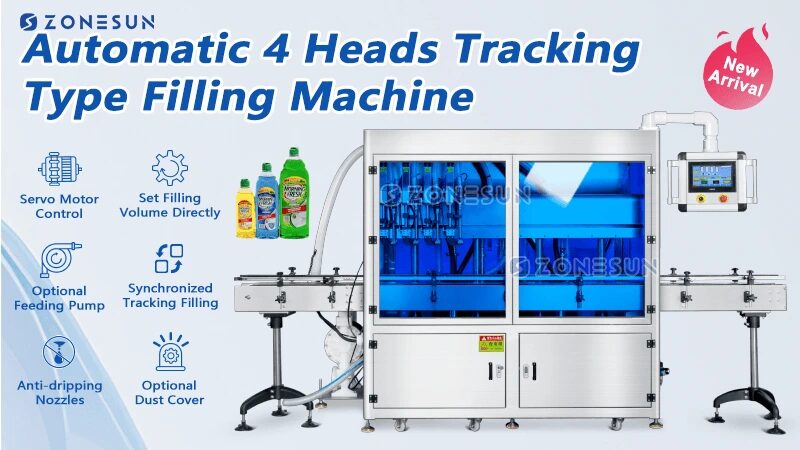
For production lines where filling consistency is critical, ZONESUN’s Quantitative Paste Tracking Filling Machine is designed to control filling volume more precisely during continuous operation. The servo gear pump allows the filling volume to be digitally set, while the synchronized tracking nozzles move with the bottles during filling. Its main features include:
- Filling accuracy: About ±0.5%
- Filling range:200–5,000 ml, customizable
- Filling control: Digitally set through a touch screen
- Tracking system: Nozzles move synchronously with bottles
- Suitable products: Body lotion, shampoo, body gel, and other viscous liquids or pastes
Minimize Unexpected Downtime
Unforeseen breakdowns can interrupt the production line. Regular inspection allows the operator to notice worn seals, loose connections, clogged nozzles, and other problems in advance.
Extend Equipment Service Life
Lubricating components, changing consumables, and minimizing mechanical strain will help extend the life of components. A maintenance regime is usually cheaper than repairing failed components during the production cycle.
2. How Should You Clean a Lotion Filling Machine?
Cleaning procedures should follow the equipment manufacturer’s recommendations and the requirements of the lotion being processed. The Lotion Filling Machine should be cleaned systematically so that product-contact areas receive particular attention.
Clean Product Contact Parts After Production
After each production run, disassemble accessible product contact parts and clean them using appropriate cleaning solutions. Stainless steel parts should be rinsed and dried before assembly. Operators should pay particular attention to:
- Filling nozzles and valve bodies
- Hoppers and product tanks
- Product pipes and hoses
- Piston or pump components
- Seals and other product-contact fittings
Avoid using abrasive tools that could scratch metal surfaces and create areas where residue can accumulate.
Remove Residual Lotion From the Filling System
Residual lotion inside pipes or pumps can become more difficult to remove as it thickens. Rinse the product path using the procedure outlined for your machine and ensure there are no visible residues present. Warm water may be useful when dealing with water-based lotions that have formed a residue. However, cleaning temperature and chemical concentration should always match the formulation and equipment material rather than being selected arbitrarily.
Check and Clean Filling Nozzles
Nozzles play a role in filling effectiveness. When a nozzle is partially clogged, slow filling, non-uniform filling, or dripping after filling may occur. After each production shift, inspect nozzle openings and clean them when residue is detected. If a nozzle becomes damaged or deformed, replacement is preferable to attempting to compensate through filling parameter adjustments.
3. What Parts of a Lotion Filling Machine Need Regular Inspection?
A Lotion Filling Machine contains mechanical, pneumatic, electrical, and product-handling components that require different inspection intervals. A simple maintenance record can help operators track wear and replacement history.
| Component | What to Check | Suggested Frequency |
| Filling nozzles | Blockage, dripping, damage | Daily |
| Seals and gaskets | Wear, cracks, leakage | Weekly |
| Tubing and hoses | Hardening, cracks, loose connections | Weekly |
| Valves | Smooth operation and leakage | Weekly |
| Pump or piston | Movement and abnormal noise | Weekly |
| Sensors | Detection accuracy and alignment | Monthly |
| Electrical connections | Loose wires or abnormal connections | Monthly |
Check Pumps and Filling Components
The pump or piston is responsible for transferring a controlled amount of lotion into each container. Unusual noise, inconsistent movement, and increased resistance may indicate wear and tear or contaminants. When the Lotion Filling Machine starts filling in inconsistent volumes, inspect the filling mechanism before adjusting the filling time or pressure.
Inspect Seals, Gaskets, and Tubing
Seals and gaskets are important in preventing leaks from moving and interconnected parts. Check seals and gaskets for cracks, distortion, hardness, or deterioration. Tubing should also be flexible and attached firmly. Any component showing visible damage should be replaced promptly.
Check Valves and Filling Nozzles
The valve controls the product flow and opens and closes consistently. Leaking from valves or nozzles may lead to product loss and inaccurate filling. It is important to ensure that the nozzle shuts properly after every cycle. Continued dripping may be caused by accumulation of product residue, wear of seals, or incorrect setting of filling parameters.
Inspect Sensors and Electrical Connections
Sensors assist in detecting the containers, positioning them correctly, and running the machines correctly. Dust, product residue, misalignment of sensors, or even loose connections can interfere with the effectiveness of the sensors. Electrical testing has to be conducted by qualified personnel, where possible.
4. How Can You Prevent Filling Problems?
Preventive control is just as important as mechanical maintenance. The Lotion Filling Machine should be operated under stable product and process conditions to minimize filling variation.
Control Lotion Viscosity and Temperature
Lotions vary in viscosity with temperature changes; this influences the rate and amount of filling. If the lotion gets thicker or thinner than normal, the filling rate and volume may vary. Manufacturers should keep the product temperature within a suitable range and adjust filling parameters when needed.
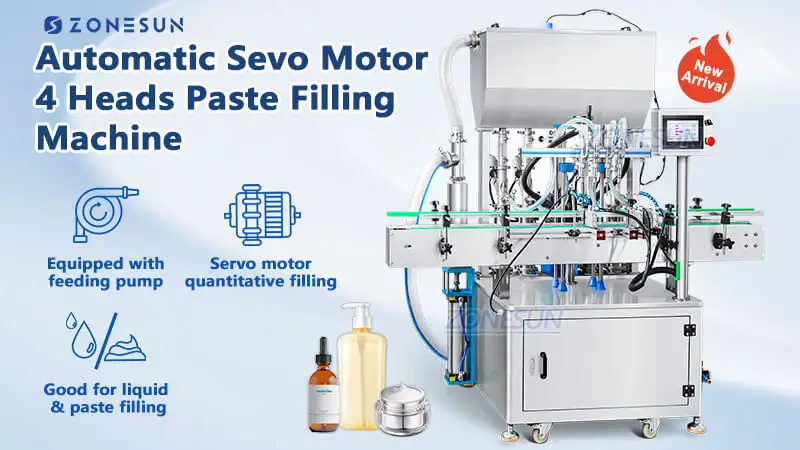
For manufacturers handling lotions with different viscosities, ZONESUN’s Cosmetic Filling Machine is a practical option. Its piston pump and feeding pump help maintain stable material delivery when filling lotions with different flow properties. Key features include:
- Filling range:10–180 ml, 30–500 ml, or 100–1,000 ml
- Filling speed: About 30–50 bottles/min
- Filling accuracy:±1%
- Filling nozzles:4, customizable
- Suitable products: Lotions, creams, and paste
Prevent Clogging and Dripping
Filling nozzles have to be kept clean and empty of product in the filling channel. If the nozzles are repeatedly getting clogged, check whether the lotion is contaminated, has changed viscosity, or is being filled under the wrong conditions.
Check Filling Volume Regularly
Perform routine weight or volume checks during production rather than relying only on the initial machine setup. For example, operators can inspect samples at the beginning, middle, and end of a production run. If the target is 250 mL, comparing sample weights after accounting for product density can provide an additional indication of filling stability.
Adjust Filling Parameters When Products Change
The various lotions would need different filling speeds, piston settings, nozzle sizes, or cycles. Don’t take the approach that the same combination will be effective for all formulations. Whenever switching over from one formulation to another, do some tests by creating a few bottles and then check their filling accuracy, nozzle performance, and product quality.
5. Conclusion
Maintenance of your Lotion Filling Machine is the key to keeping the machine in good working condition. Cleaning, regular component checking, filling, and correct lotion conditions can minimize the chances of failures. Should you have any inquiries about machine maintenance or filling operations, don’t hesitate to contact ZONESUN.