
In modern industrial production, filling machines for different materials such as pastes, liquids, granules, and powders each come with distinct technical requirements and application scenarios. Choosing the right filling machine is crucial for enhancing production efficiency and ensuring product quality. This article compares filling equipment based on their characteristics, applicable scenarios, precision, and efficiency, helping businesses make more informed decisions when selecting filling equipment.
1. Paste Filling Machines
Machine Features: Paste filling machines usually apply piston and screw pumps for pumping high viscosity products such as creams, toothpaste, and jams. Accuracy and stability are important features for measuring highly viscous products.
Uses: Paste filling equipment is commonly used in many fields such as cosmetics, pharmaceuticals, and food. Toothpaste, creams, ointments, and sauce production require paste filling equipments.
Benefits: Paste filling machines have high capacity in processing highly viscous products with precision and stability.
Difficulties: The viscous nature of pastes makes paste-filling equipment vulnerable to clogging, which complicates cleaning and maintenance procedures.
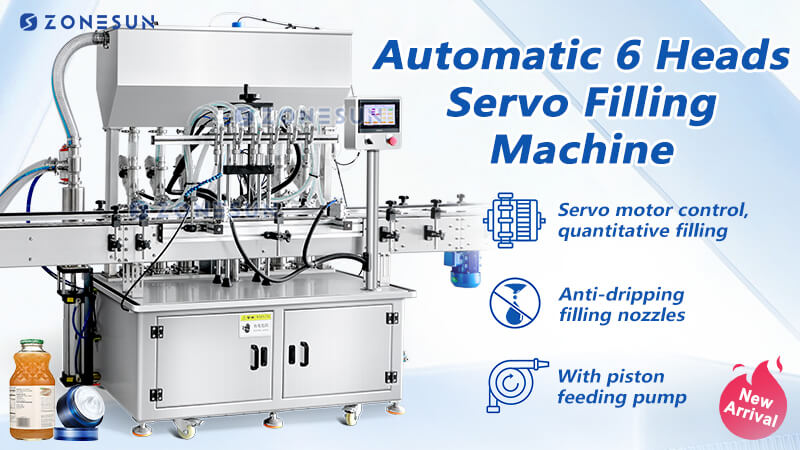
Servo Six Head Paste Filling Machine: A servo-driven filling equipment, capable of accurate control of the fill range. The machine suits both liquid and paste products. The machine operates with high accuracy and is commonly used in personal care, food, and cosmetics sectors. Its filling capacity is around 30-70 bottles per minute with filling precision at ±1%.
2. Liquid Filling Machines
Machine Features: Liquid filling machines are based on principles like gravity fillers, pump fillers, or metering pump fillers. The filling equipment regulates different flow rates and capacities according to the viscosity of the liquids to be filled.
Uses: Liquid filling machines are found in many industries, including beverages, chemicals, pharmaceuticals, and dairy products. The machines fill liquids such as water, alcohol, oils, and emulsions, among others.
Strengths: The machines have many advantages, such as being able to control the volume of liquids to be filled in containers precisely.
Difficulties: Liquids can sometimes form foam or volatize, thus affecting the precision of filling. Extra measures must be taken to minimize air formation and prevent spilling.
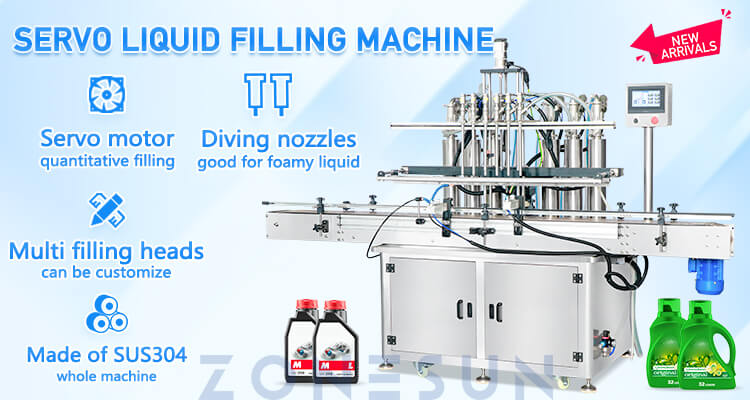
Six-Head Servo Liquid Filling Machine: The six-head liquid filling equipment is piston-driven and uses a servo motor. The machine fills various products, including soap, engine oil, detergents, and emulsions. Its speed ranges between 20 and 40 bottles per minute, depending on bottle size and the substance to be filled. The machine has an error rate of ±0.5%.
3. Granule Filling Machines
Machine Features: Granule filling machines make use of vibrating, rotating, or gravitational feeding systems. The construction of the machine takes into account the sizes, shapes, and flow of granules.
Applications: Granule filling machines have a number of applications in industries that manufacture items like seasonings, pharmaceutical granules, feed, and plastic pellets. The products include salt, sugar, seasonings, granulated medicines, and animal feed.
Merits: Such machines are very productive, and they can process huge numbers of products.
Difficulties: Due to differences in size and shape, the filling process may not be uniform, and thus, measuring devices are necessary.
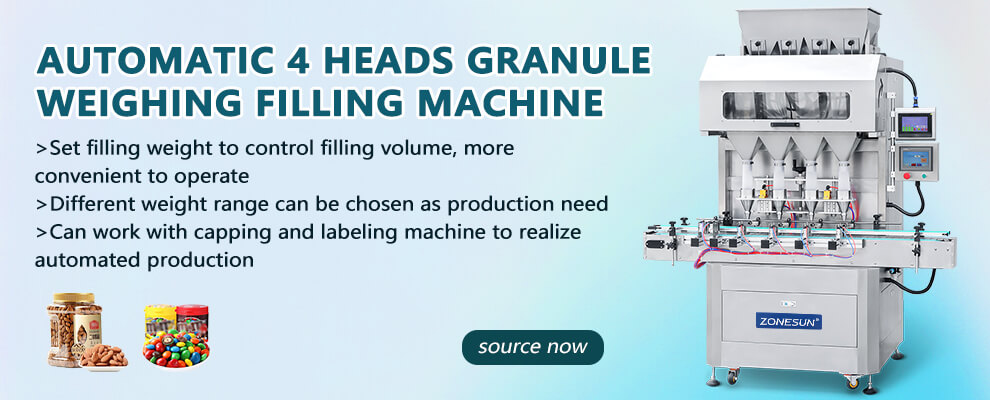
This automatic granule filling machine can control filling volume by setting filling weight, it can pack granular materials with high density and non-viscous, and weighing error with ±1-2g(depends on filling range).
4. Powder Filling Machines
Machine Features: Powder filling machines usually employ screw conveyors, piston pumps, and vibrators. As powders are made up of minute particles that can easily absorb water, special machines are needed for them to avoid clumping, leakage, and static.
Usage Areas: Powder filling machines are used in industries like food, cosmetics, drugs, and chemicals. Some of the products made by these machines are milk powder, flour, detergent powder, health tonics, and chemicals.
Advantages: They are capable of measuring powder accurately and working on a large scale.
Difficulties: Powder filling machines produce static electricity, which is why they need frequent cleaning.
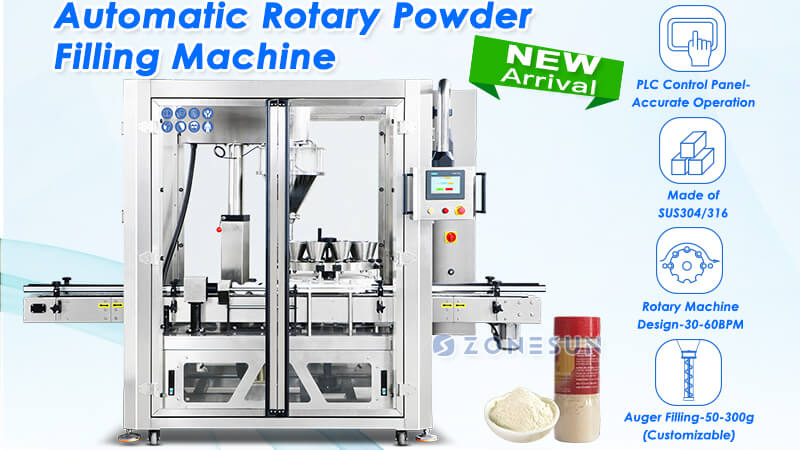
Automatic Rotary Powder Filling Machine: The rotary filling equipment of this type is used to fill powders such as milk powder, protein powder, chocolate powder, and coffee powder. It is easy to combine this machine in an automatic production line that consists of an unscrambler machine, a capper machine, and a labeler machine. This machine works at speeds from 30 to 60 cycles per minute with ±1% filling error rate.
5. Machine Comparison Summary
| Filling Type | Machine Characteristics | Advantages |
|---|---|---|
| Paste Filling | Uses piston or screw pumps for high-viscosity materials | High precision, stable performance |
| Liquid Filling | Uses gravity, pump, or metering pumps for varying viscosities | Versatile, precise filling control |
| Granule Filling | Uses vibration, rotation, or gravity feed for granules | High efficiency, adaptable |
| Powder Filling | Uses screw conveyors, piston pumps, or vibration feeders for powders | Precise, large-scale production |
6. Conclusion
In selecting the proper filling machine, it should be noted that considerations should include not only the product being filled, but also the cleaning and maintenance of the filling machines themselves. It will be possible to learn the features of various types of filling equipment from this comparative analysis of filling equipment for pastes, liquids, granules, and powders.
If you need filling equipment for pastes, liquids, granules, or powders, we recommend you take a look at our selection of ZONESUN filling equipment.