
A labeling machine is one of the important instruments to make the production and packaging process much more efficient and to guarantee correct labeling. There are various types of labeling machines available, such as bottle labeling equipment, flat labeling equipment, thermal transfer labeling equipment, carton/case labeling equipment, and intelligent automatic labeling machines. Each type of labeling machine serves different packaging material requirements for different industries.
1. Selection of Labeling Machine Depending on Product Form and Packaging Material
Various types of packaging material need different types of labeling machines:
- Bottle Labeling Machines: These are used for cylindrical bottles, rectangular bottles, flat bottles, and irregularly shaped bottles. Cylindrical bottle labeling machines make use of the rotary technique, which is fast and good for bulk processing; on the other hand, for irregular bottles, customized equipment is needed.
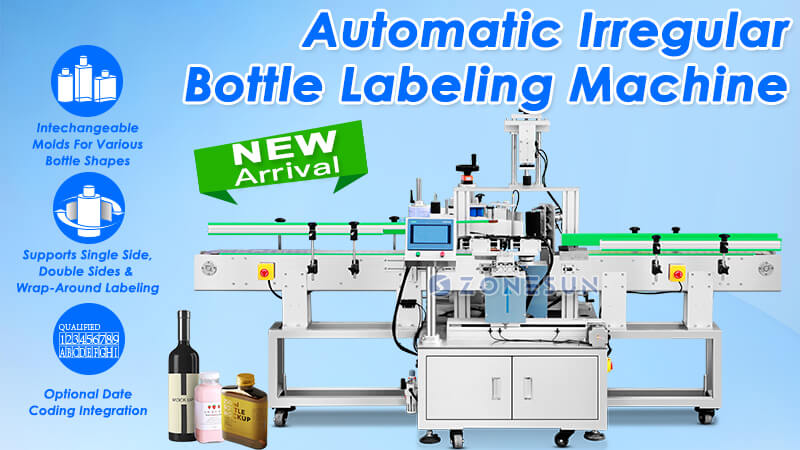
Practical Case: ZONESUN ZS-SL25 Robotic Labeling Machine
This equipment is designed to cater to both cylindrical and oddly shaped bottles (such as oval shape or oddly shaped bottles). Labeling accuracy on this machine is ±1mm. There are various types of date stamping devices available, like ribbon coder, inkjet printer, and laser marker. This equipment is extremely suitable for food, beverages, and personal care products.
- Flat Item Labeling Machines: Suitable for Bags, Cardboard, Boxes, Pallets, and all other kinds of flat packaging. There is more pressure on accuracy with flat labeling machines because of items such as gift boxes and pharmaceuticals.
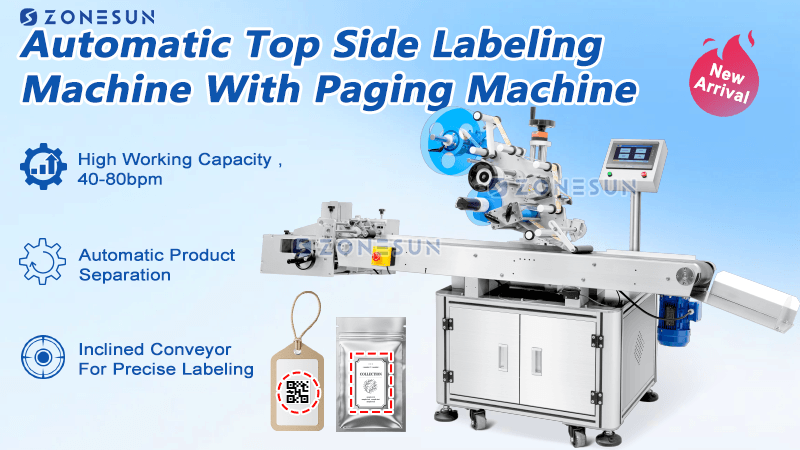
Practical Case: ZONESUN ZS-TB832 Fully Automatic Flat Labeling Machine
The machine has been made specifically for front labeling of tags, packing bags, and cardboard, and it labels at the rate of 40 to 80 labels per minute. The machine is also fitted with the paging system; therefore, it is able to separate stacked products for continuous labeling. The inclined conveyor design utilizes gravity to position the products for labeling, and its accuracy is ±1mm.
- Labeling machine by Thermal Transfer: This machine can be used to label bottles, caps, paperboard, and many other substrates accurately. They are hard and have resistance against heat, thus making them suitable for use in the food industry, cosmetics, and pharmaceuticals.
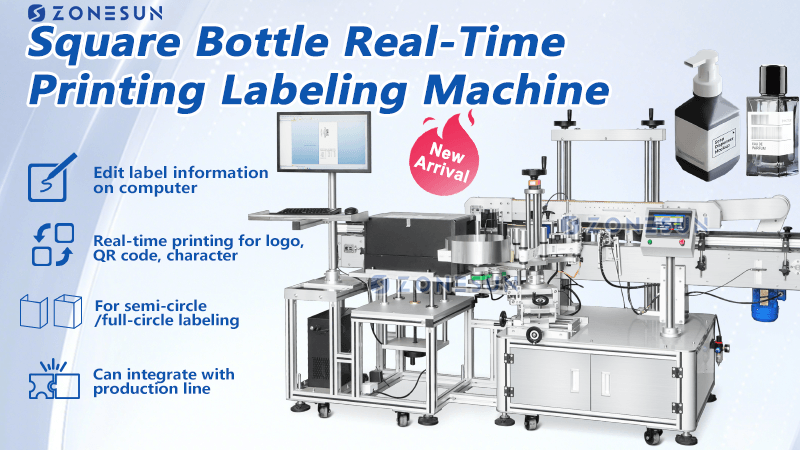
Practical Case: ZONESUN Thermal Transfer Online Printing Labeling Machine
This device also achieves a labeling accuracy of ±1mm and supports simultaneous online label printing and labeling, ensuring that every product is clearly and durably labeled. Applicable to food, beverage, cosmetics, and daily chemical packaging.
- Labeling machines for cases/boxes: Specially designed for boxes and logistic packaging; useful for volume shipping purposes and barcode labeling; quick scanning at transit time.
The selection of a labeling machine based on the shape and materials of the packages can ensure high-quality labeling and efficiency.
2. Choice of the Machine Considering Its Functionality and Level of Automation
The degree of automation of the machine plays an important role when selecting a labeling machine:
- Manual Labeling Machines: It works well for small businesses or small volumes of production. It is affordable but inefficient.
- Semi-Automated Labeling Machines: It is simple to operate and is suitable for medium-sized production volumes.
- Automated Labeling Machines: It is efficient for high-volume production with labeling speed, two-sided labeling, and barcode printing functions.
- Smart Labeling Machines: This machine is equipped with scanning, detecting, and auto-correcting functions, thus ensuring minimum labeling errors.
3. Industry Application Perspective
Usage of labeling machines is different from one industry to another.
- Food & Beverage Sector: Bottle packaging, can packaging, and snack packaging need very efficient bottle labelling machine or thermal transfer labelling machine.
- Cosmetic Industry: Bottles, boxes, and caps need high-precision flat labeling machines or thermal transfer labeling machines for better appearance.
- Pharmaceutical Industry: Medicine bottles, reagent boxes, and drug pamphlets need highly durable and heat-resistant labeling machines, thermal transfer or intelligent labeling machines are preferable.
4. Critical Factors in Selecting the Labeling Machine
When selecting a labeling machine, the following points have to be taken into account:
- Production volume: high volume of production necessitates high-speed automatic labeling machines; lower volumes allow semi-automatic or manual machines.
- Shape and size of bottles and other packages: the machine selected must match the size and type of products.
- Material of the label: labeling equipment differs based on the materials that they use; some use only paper, while others accommodate PVC, PET, heat-resistant labels, etc.
- Accuracy of labeling: pharmaceuticals, cosmetics, and gifts need labeling equipment that is capable of producing precise or intelligent labeling.
- Price and economic considerations: It is necessary to purchase equipment based on requirements, but not to overpay or buy something that cannot meet the production needs.
5. Recommendations on Usage and Maintenance
With all the correct choices made, usage and maintenance of the equipment remain essential.
- Inspections of rollers, conveyors, and sensors have to be made regularly to prevent mislabeling and jams.
- Adjustment of the pressure and speed depending on the label used ensures good quality labeling.
- Cleaning of dust and old labels increases the longevity of the machine.
- Training operators improves production results.
Conclusion
Selecting the most appropriate labeling machine is not just about choosing between a bottle labeling equipment, a flat labeling equipment, or a thermal transfer labeling equipment; rather, many other factors have to be considered, including product shape, industry requirements, production scale, labeling material used, and automation level.