
The working principle of the tube filling and sealing machine includes: inserting an empty tube into the machine, aligning it, filling it with the preset amount of product, and then sealing it using heat sealing or ultrasonic technology. After sealing, the filled tubes typically undergo automatic trimming and coding processes to prepare them for subsequent packaging processes.
This whole process minimizes manual labor, ensures better hygiene, and allows for the same look of products on the shelf.
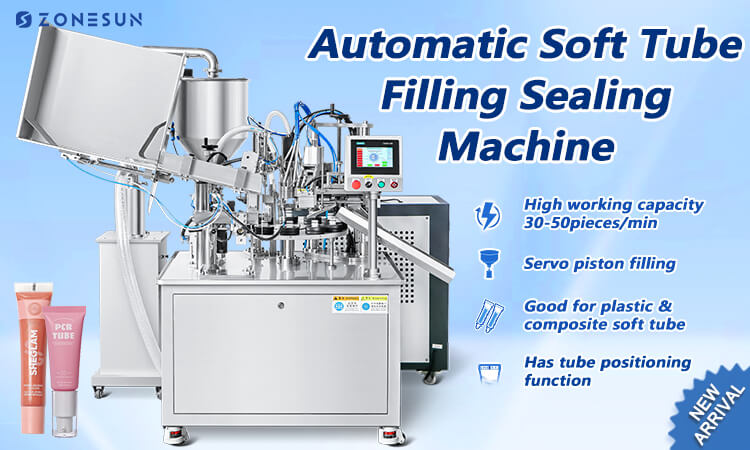
Why the Tube Filling and Sealing Machine Matters in Production
A modern tube filling and sealing machine solves several problems that can be caused by manual filling or older equipment:
1. Accurate Volume Settings
Tubes for creams, gels, pastes, and lotions have to deliver precisely to the customer. Servo-driven pumps and precise sensors ensure every tube gets the same amount.
2. Strong leak-proof sealing.
Either heat sealing or ultrasonic sealing helps the final product to stay closed during transportation and storage. It is particularly important for formulas with high viscosity, which would otherwise leak through weak seams.
3. Higher Production Speeds
Dozens can be processed in one minute using a tube filling and sealing machine; thus, companies could increase output without additional employment.
4. Uniformity in Product Appearance
The machine ensures consistent sealing width, clean edges, and even trimming-all very important in terms of brand image and retail presentation.
All these features make the tube-filling and sealing machine practical and dependable for those factories that want to achieve stability in production, as well as increased quality of output.
Key Features Found in Modern Tube Filling and Sealing Machines
While different factories choose different configurations, most modern models of tube filling and sealing machines include the following:
Automatic Tube Positioning
Sensors rotate tubes to align printing marks before filling.
Multi-Type Tube Compatibility
They support plastic, laminated, aluminum, and metal tubes.
Temperature-controlled sealing
The heat-sealing process also uses adjustable temperature and pressure to correctly close the tube ends.
Touchscreen Control Panel
Operators can change speed, filling volume, and tube size with easy adjustments.
Hopper options of various products
Heating systems can be added for wax-based or thick formulas.
Coding and Trimming
As the tubes leave the sealing stage, date codes, batch numbers, or serial marks can be printed.
Most models of the tube filling and sealing machine integrate automatic hose positioning, where sensors rotate each hose until the printed markings are perfectly aligned, reducing waste and improving appearance. Its compatibility with various hose types allows factories to produce plastic, composite, aluminum, and metal hoses on the same production line, reducing equipment investment and making it suitable for numerous industries and a wide range of products.
Common Industries Using Tube Filling and Sealing Machines
A tube filling and sealing machine finds extensive applications across different industries dealing in compact and portable packaging.
Cosmetics
Face creams, BB creams, serums, hand creams, and sunscreens.
Daily Chemical Products
Toothpaste, hair gel, cleaning pastes, and household repair gels.
Industrial Products
Adhesives, lubricants, silicone gels, conductive pastes.
Food Products
Condensed milk, honey paste, and gel-based ingredients.
Tube filling and sealing machines are widely used because they are suitable for products requiring clean, portable, and airtight packaging. The common need across various sectors is for precision, consistent sealing quality, and efficient production – making tube filling and sealing machines an essential component of modern production lines.
Selecting the Right Tube Filling and Sealing Machine
The choice of a reliable tube filling and sealing machine depends directly on the following:
Product viscosity
Thicker creams will require stronger pumps and higher-pressure nozzles.
Material of the tube
Plastic and laminated tubes work with heat sealing, while aluminum may need folding-style sealing.
Required Speed
Multi-head or faster servo-driven systems are required by high-volume factories.
Tube sizes
The machines need to support your tube diameters and heights.
Budget and Maintenance
Most importantly, choose models with easy-to-clean components and with stable availability of spare parts.
Choosing the right tube filling and sealing machine begins with understanding your product, packaging materials, and production goals. Ease of maintenance, easy cleaning, and a reliable supply of spare parts are essential to ensure stable output, smoother operation, and fewer production interruptions.
If you have any questions, the best approach is to discuss your product and production needs in detail with the technical team before selecting a machine.
ZONESUN offers a variety of tube filling and sealing machines, and can also provide customized machines to meet specific customer needs. Simply tell us the basic information about your product, pipe material, filling requirements, sealing requirements, and any special customization requests, and we can produce a product that meets your requirements. Welcome to contact us for customization.
Conclusion
The tube filling and sealing machine plays a very important role in packaging various types of creams, gels, pastes, and many other related products with precision and efficiency. It improves the speed factor, ensures less wastage, and offers consistent sealing quality; therefore, it is widely used in modern industrial manufacturing lines.